Junctional TrainingBY JUNCTION JAH
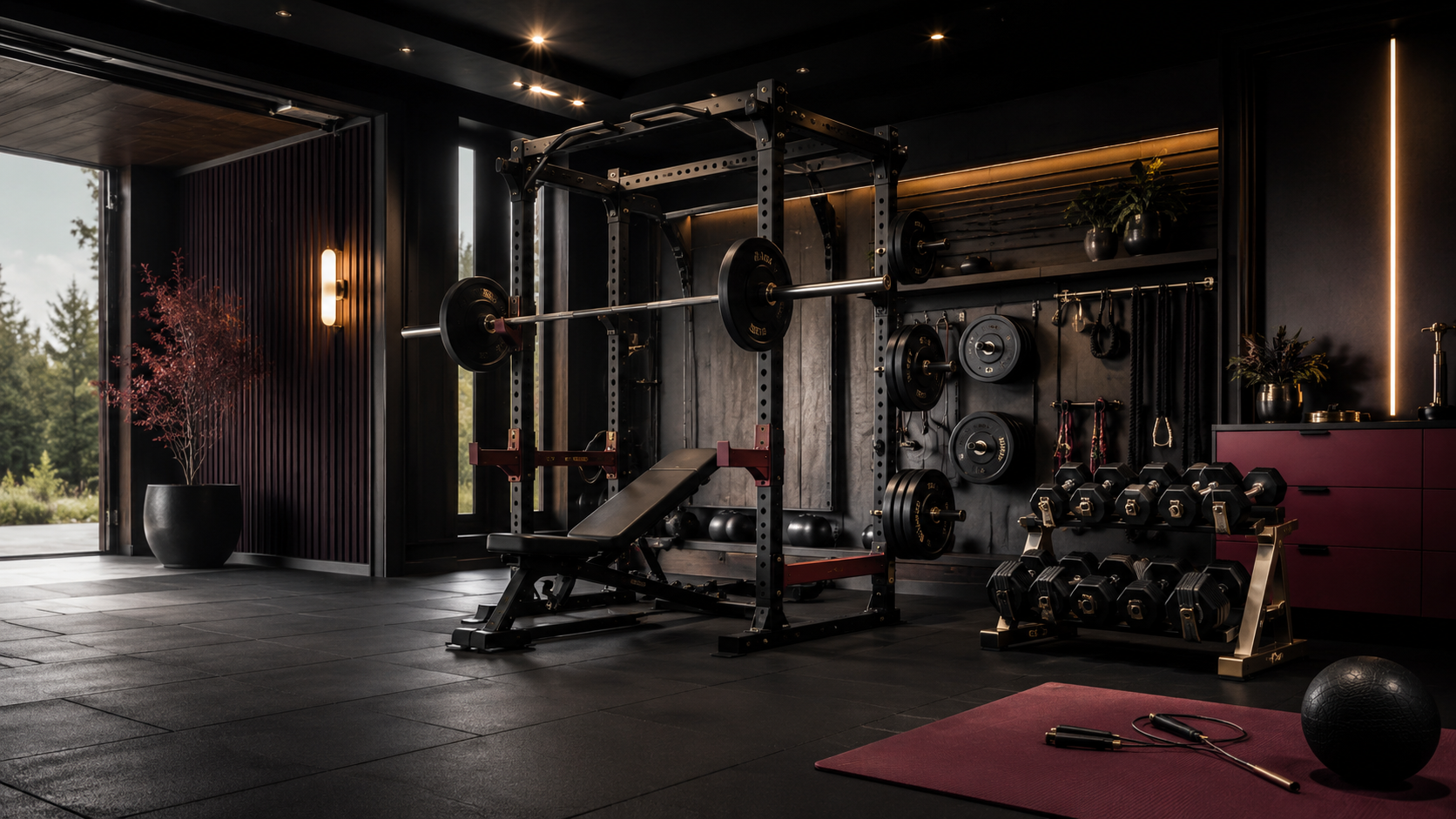
This guide is for someone who has more room and wants a real training setup, not just a small apartment corner. Once you start adding heavier weights, the first question is not "what looks cool?" It is "can my floor, space, and routine handle this?"
A bigger home gym should be built in layers: protect the floor, create safe lifting space, add weights, then add specialty tools. If you skip the base and jump straight to heavy equipment, you get noise, floor damage, clutter, and gear you barely use.
Floor protection first. Then weights. Then specialty gear. Buy heavy things only after you know how your training space actually works.
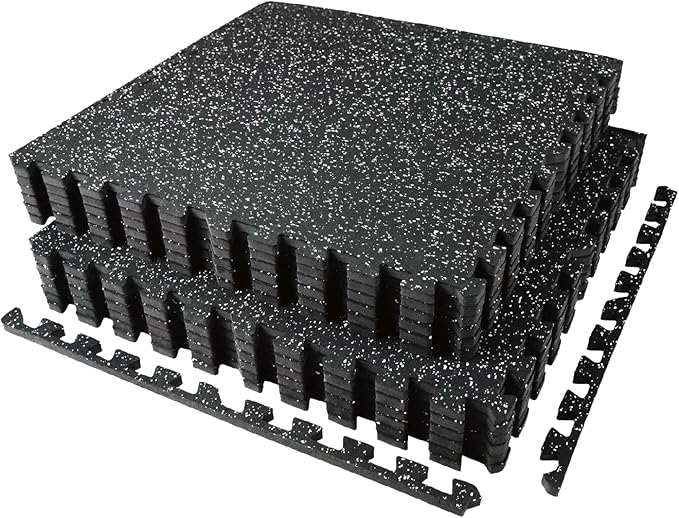
Why it matters: A bigger home gym setup needs proper flooring before the heavy gear goes in. Weight, vibration, and dropped equipment become real problems without it. Rubber floor tiles or mats protect your subfloor, reduce noise traveling downstairs, and create a safe training surface that handles repeated loading.
Trainer note: This is the unsexy first purchase. Every person who skips floor protection and goes straight to heavy gear ends up dealing with floor damage, noise complaints, or both. Do it first.
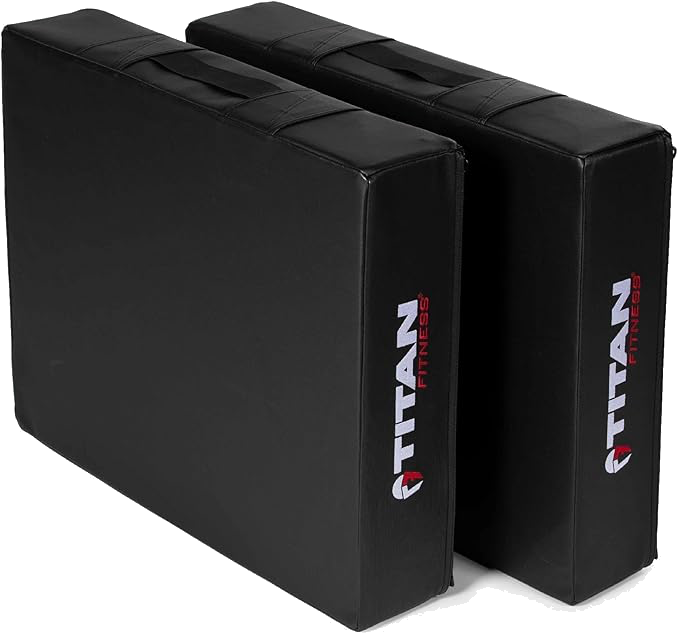
Why it matters: Drop pads reduce impact and noise when weights hit the ground. If you deadlift, do heavy dumbbell work, or move toward Olympic-style lifting, these protect both your floor and your training relationship with everyone below you. They are not needed at light loads, but once you are moving serious weight, they earn their space.
Trainer note: Drop pads are not for beginners. They make sense once you are pulling or pressing enough weight that setting it down quietly is no longer realistic.
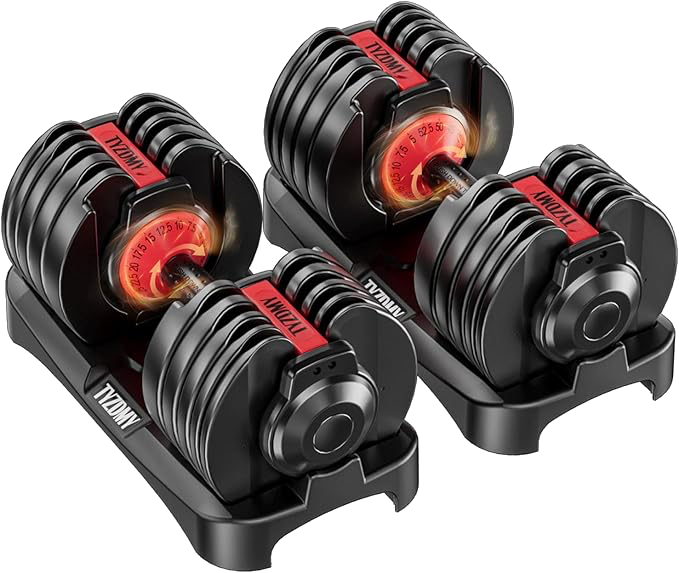
Why it matters: Before committing to a full dumbbell rack or barbell setup, adjustable dumbbells give you a real range of loading in a compact footprint. Good middle ground between apartment bands and a full strength setup. Once you know how you train, this is an efficient upgrade.
Trainer note: Adjustable dumbbells are the most space-efficient strength tool available. They make sense in both small and larger setups before you go full barbell.
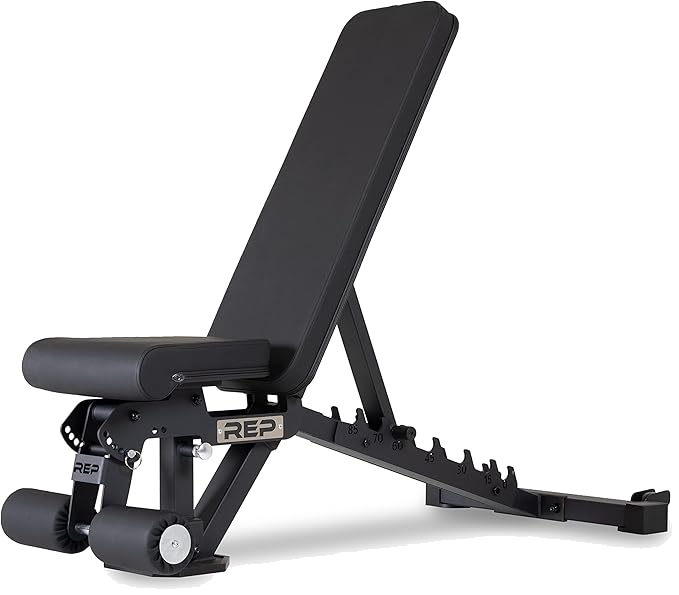
Why it matters: A bench turns dumbbells into a full pressing setup. Flat, incline, decline, supported rows, step-ups, split squats — most of your upper body and accessory work gets better once a bench is in the setup. The REP AB-3100 is a solid mid-tier pick: stable under load, multiple back angles, and built to last.
Trainer note: Pay attention to pad thickness and frame stability. A bench you press heavy on should not wobble. The REP holds up.
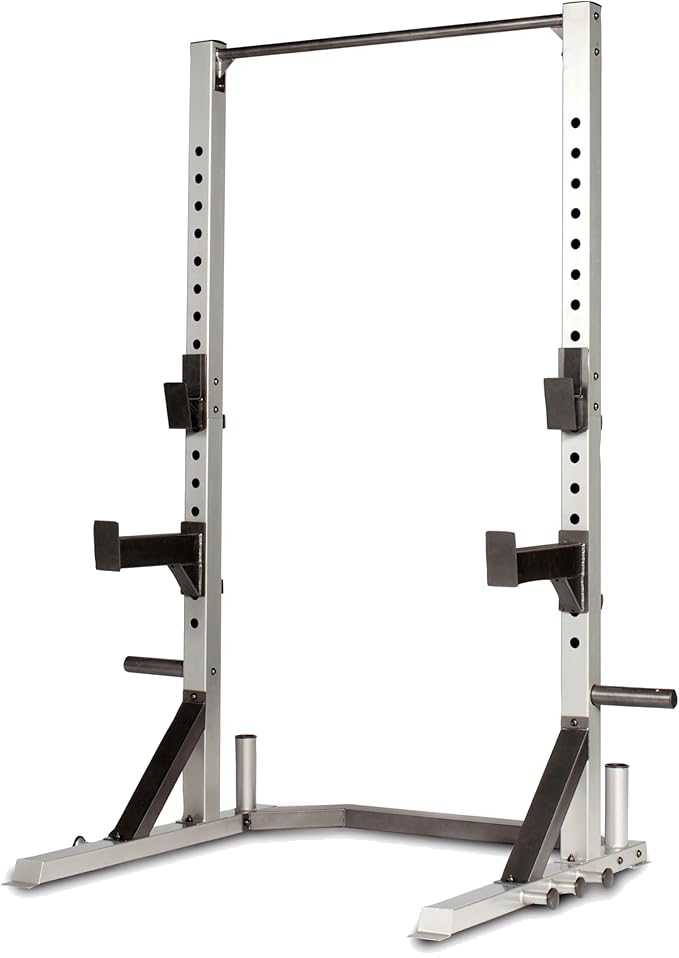
Why it matters: A rack is the foundation for barbell training. Squats, bench press, overhead press, pull-ups, and safety catch work all require a rack or squat stand. This is only for people who have the space, ceiling height, floor protection, and a serious strength training routine already in place.
Trainer note: Measure your ceiling height before buying a rack. A lot of basements and garage spaces have lower ceilings than they look. Get this wrong and the rack does not fit safely.
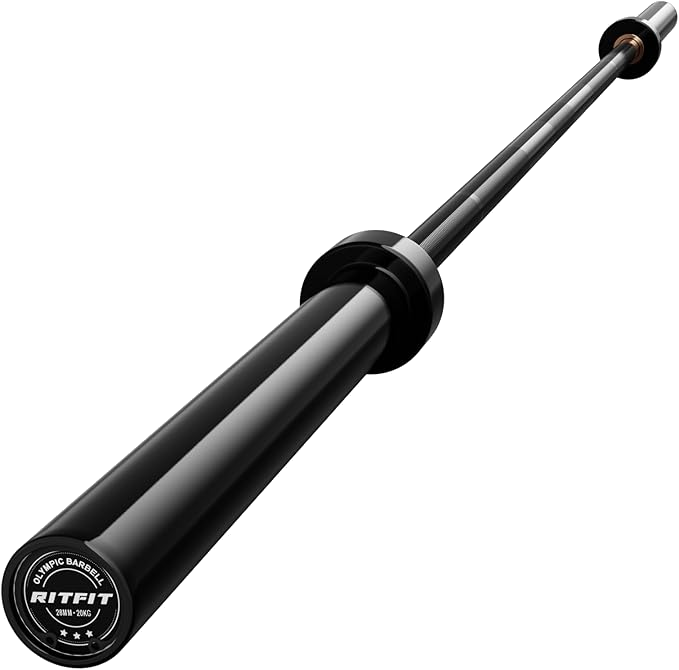
Why it matters: The barbell is the highest-loading tool in any home gym. Squats, deadlifts, bench press, rows, overhead press — all of it. This is a late buy. You need floor protection, a rack, collars, and a real program before this makes sense. The RitFit 20kg Olympic bar is a reliable, no-nonsense starting point for home gym barbell work.
Trainer note: Do not buy a bar before you have a rack, plates, and collars. Get the full setup at once or wait until you can.
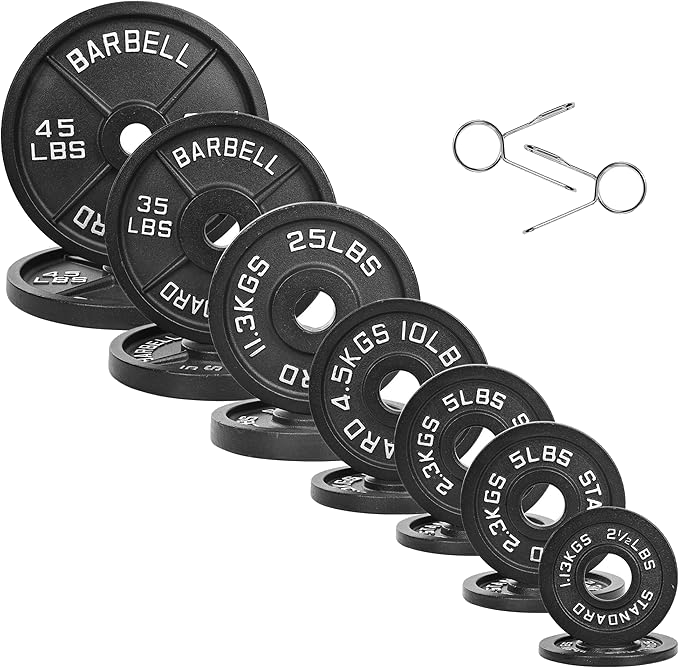
Why it matters: A barbell is useless without plates. Standard iron plates are the practical choice for most home gyms — cheaper than bumpers, widely available, and they work for every barbell lift. Start with a 300 lb set and add incrementally. You will use these for years.
Trainer note: Buy more plates than you think you need. Running out of loading options quickly gets frustrating and expensive to fix piece by piece.
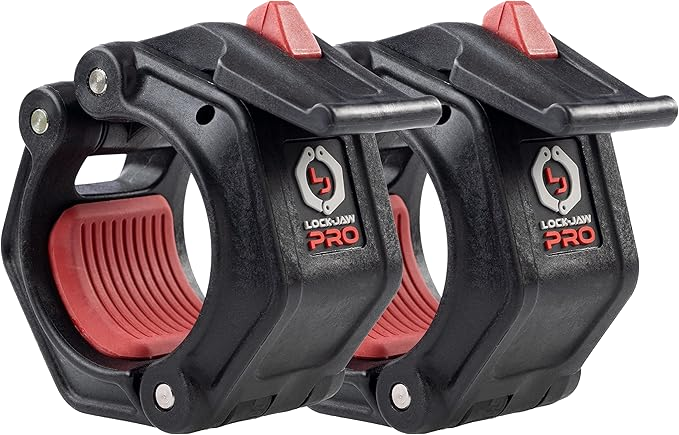
Why it matters: Plates sliding off mid-lift is a real hazard. Lock-Jaw Pro collars are fast to use, secure under load, and hold up over time. This is a small buy that earns its space immediately. Do not train with a loaded bar without them.
Trainer note: Spring collars work. These work better and faster. Worth the small upgrade.
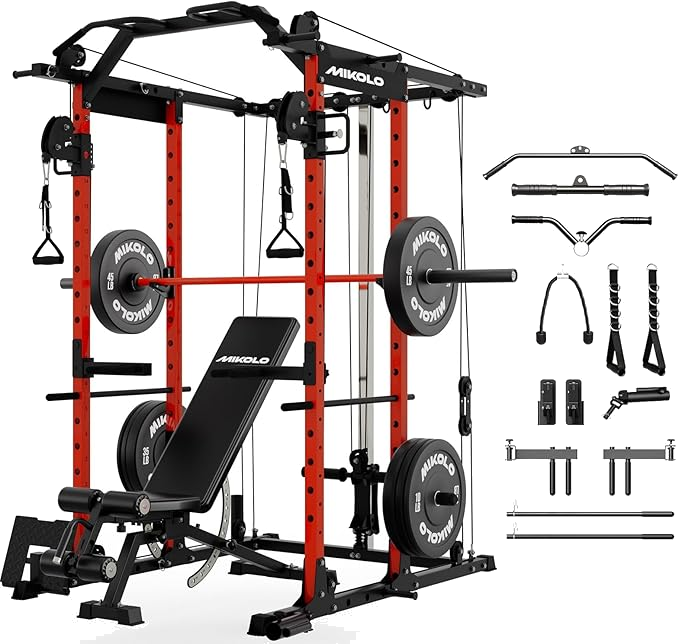
Why it matters: If you have the space, the ceiling height, and the budget to do this in one shot — this Mikolo bundle gets you the rack, cable attachments, a bench, a barbell, and bumper plates together. No piecing it together over months. You set it up once and you have a real gym. It is the most efficient path to a complete strength setup if you already know you want to train seriously long-term.
Trainer note: This is not a beginner buy. If your training is dialed in and you just need the gear, this saves you the coordination of buying rack, bar, plates, and bench separately. It is a real setup in one box.
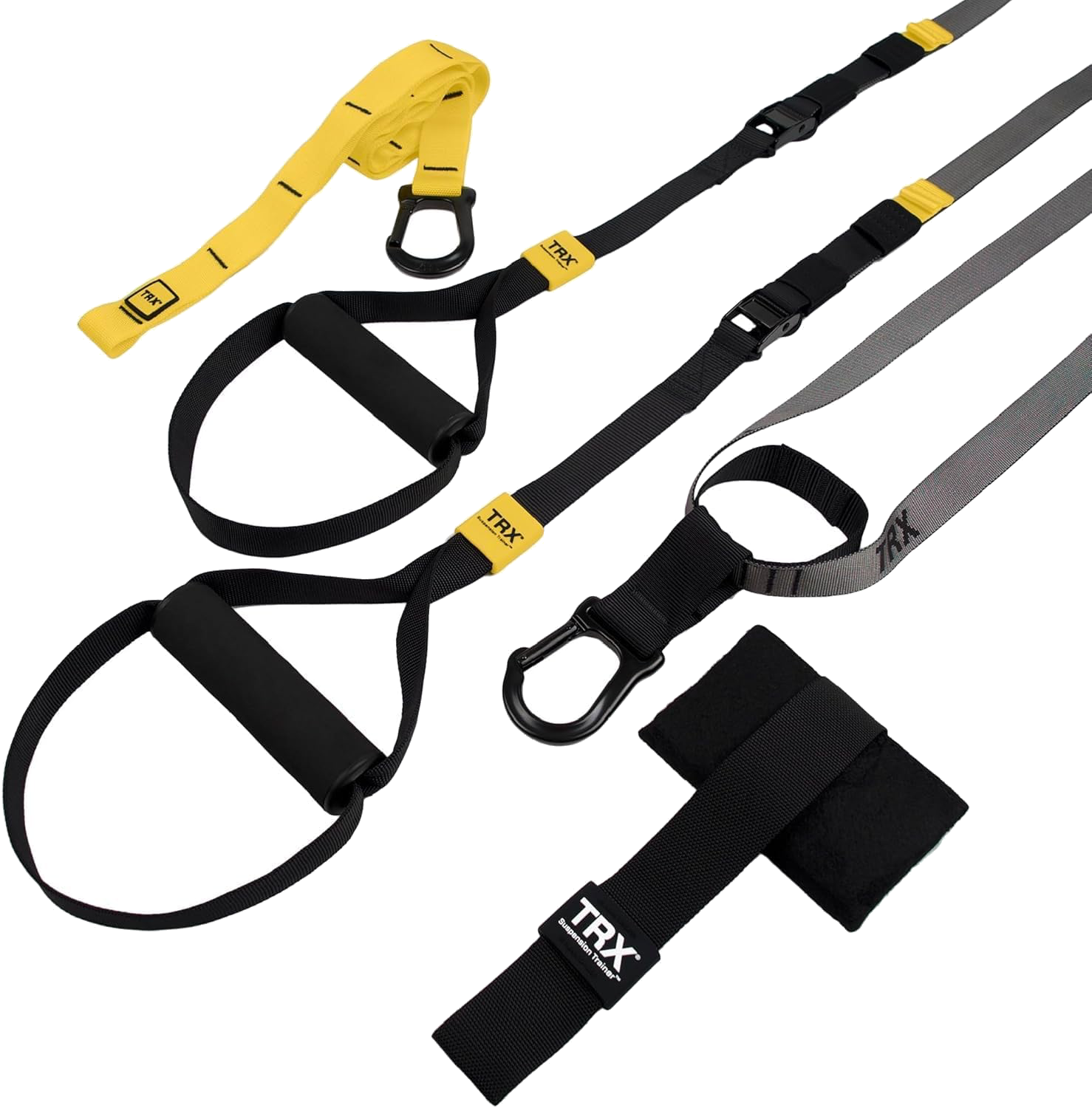
Why it matters: Even in a bigger gym with heavy weights, bands and suspension trainers still have a role. Warmups, shoulder health work, joint-friendly accessories, face pulls, rows, and mobility all stay easier with bands and a TRX. These tools do not go away when you add heavy gear — they fill in the training gaps that barbells and dumbbells leave.
Trainer note: The people who get the most out of a bigger gym are the ones who still use bands and TRX for warmups and shoulder work. Heavy lifting does not make lighter tools irrelevant.
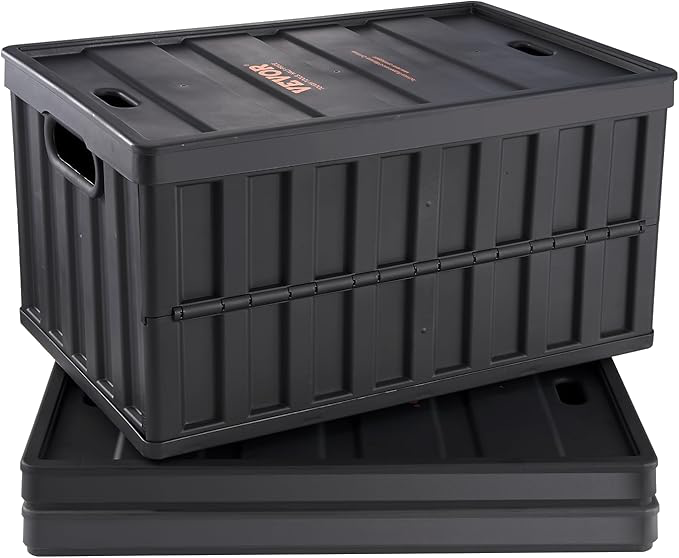
Why it matters: A bigger home gym accumulates small gear fast: clips, bands, handles, straps, chalk, and accessories. Without storage, the floor becomes a hazard and sessions start with a search. Get a dedicated bin or shelf for small gear early in the buildout.
Trainer note: A bigger gym with no storage system becomes a room you stop wanting to train in. Get organized early and the space stays usable.
What should I buy first for a bigger home gym?
Floor protection. Always. Before any weight or heavy equipment goes in, the floor needs to be protected. Rubber tiles or mats prevent damage, reduce noise, and create a safe training surface. Everything else builds on that base.
Do I need drop pads for a home gym?
Not for light work. Drop pads make sense once you are lifting heavy enough that setting weights down quietly is not realistic. If you deadlift, do heavy dumbbell work, or train with Olympic-style movements, drop pads protect your floor and keep the peace with anyone downstairs.
Should I buy adjustable dumbbells before a barbell for a home gym?
Usually yes. Adjustable dumbbells give you a wide loading range without needing a rack, ceiling height clearance, or full barbell setup. They are a good middle step while you figure out exactly how your space and training routine work together before committing to a rack and barbell.